
Watercolor Style Week 1

Exploring Marks & Movement in Watercolor
One of the joys of watercolor is discovering the variety of marks your brush can make and noticing which techniques feel most natural to you. In our first week of class, we focused on loosening up and experimenting with movement, texture, and flow. Below, you’ll find a breakdown of the techniques we explored together and some ideas for trying them at home.
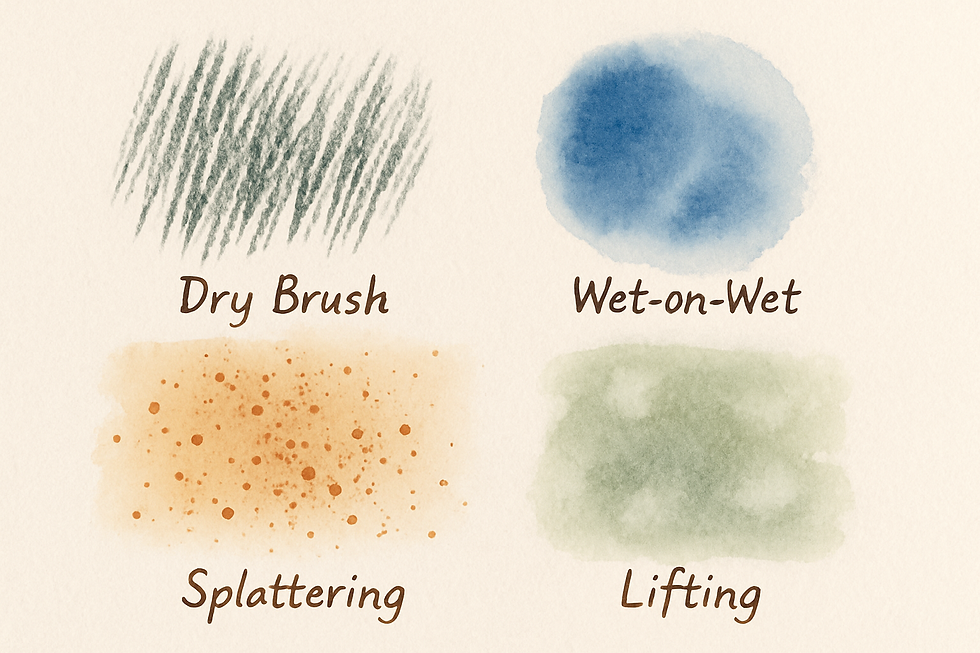
Dry Brush
Dry brushing is all about texture. Instead of loading your brush with water, you use just a little moisture and pigment. When dragged lightly across the paper, the brush leaves behind broken, scratchy lines that mimic the look of grasses swaying, tree bark, or weathered stone.
How to try it: Dip your brush in paint, then blot off most of the water. I like to use a old square brush to create grass like strokes, for this you hold the brush vertically. For more of a bark like texture use a round brush,
hold the brush more horizontally and let the bristles skip across the surface.
What to notice: This technique encourages a sense of looseness—imperfection is what makes it beautiful. The roughness of the paper will catch the pigment in unique ways, giving you an organic look without overworking details.
Wet-on-Wet
This is watercolor at its dreamiest. By brushing a layer of clean water or a wash of color onto your paper before adding more color, you create a surface where pigment can spread and blend freely.
How to try it: Paint a shape with clean water or color, then drop pigment into it. Watch how the paint blooms, softens, and flows into unexpected directions.
What to notice: You’ll practice letting go of control. Some areas may spread farther than you planned, while others may pool in subtle gradients. This technique is perfect for painting skies, mist, water, or any subject that benefits from softness and fluidity.
Splattering & Lifting
These two techniques are playful opposites—one adds energy, while the other creates light.
Splattering: Load a brush with paint and tap it gently over your paper. This creates lively bursts of color, like stars in a night sky, raindrops, or a sense of movement.
Lifting: Using a dry brush or towel, gently blot or sweep paint away from the paper while it’s still damp. This creates highlights and texture, revealing lighter areas beneath.
What to notice: Splattering helps you loosen up and break away from perfectionism, while lifting shows you how subtraction can be just as powerful as addition in watercolor. Together, they balance freedom with intention.
Practice Prompt
We ended class by using these techniques to paint a feeling or weather connected to our “special place.” Whether breezy, calm, or stormy, the goal was not a perfect landscape but an exploration of how marks and movement can convey atmosphere.

At-Home Assignment
This week, create a loose painting inspired by your special place using these techniques. Don’t worry about perfection—focus on noticing what feels fun or natural.
Was it the scratchy freedom of dry brush?
The dreamy unpredictability of wet-on-wet?
The playful energy of splattering?
Bring a painting or a short journal entry next week describing which techniques felt most like you.
Watercolor is as much about discovery as it is about painting. The more you explore marks and movement, the more you’ll uncover your personal style.


Comments